
Ask the Experts
The Utrecht Guide to Charcoal
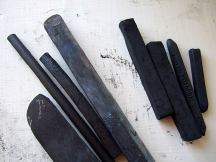
"Are all charcoal products made of the same thing? What about Carbon Pencils? Are they also a type of charcoal?"
A: Charcoal is one of the oldest artist's pigments, in use since distant pre-history. Carbon blacks feature prominently throughout the history of art, from cave paintings to the modern studio.
Fabric has been used as a painting support for centuries, first mounted to rigid panels, and later stretched over wooden frames. The introduction of stretched canvas is associated with early Venetian painters who sought alternatives to wooden panels that swelled, warped and cracked in a humid climate. After much trial and error*, it’s believed that painters discovered the protective effect of hide glue sizing upon observing the good condition of painted canvas glued to panels. Over time, stretching, sizing and priming canvas became a standard practice in the artist’s studio and among professional colourmen (historical forerunners of modern art materials manufacturers). Today, canvas is the most popular painting support- easy to prepare in-studio and convenient to buy ready-made.
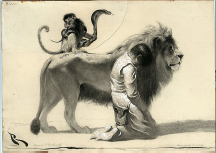
Modern charcoal is made by firing wood in an oxygen-starved kiln. Historically, it was produced on-site where raw materials were available in hand-assembled stacks designed to produce sustained heat that would not completely consume the material inside. For safety's sake, it was typically necessary for the charcoal maker to stay awake for several days, seated on a special one-legged stool which would tip and fall should the craftsman nod off.
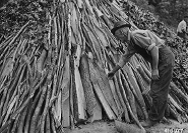
Charcoal drawing by Norman Rockwell
Vine and willow charcoal are examples of the material in its raw, natural state. These are produced from sections of grape vine and willow branch left in their original shape. This material has no binders added, so vine and willow charcoal allow complete removal with an eraser, but require fixative for permanence. Vine and willow charcoals are good for sketching on the canvas before painting, as they are light enough not to stain colors.
Compressed charcoal is a type of crayon produced by mixing charcoal powder with binders including grease, wax and starch. This form of charcoal produces dark, bold marks that cannot easily be erased. For this reason, compressed charcoal should not be used for preliminary drawing on canvas unless the artist deliberately wishes to intermix the drawing with subsequent paint applications.
Vine, willow and compressed charcoal all have subtly different temperatures of black, which will be noticeable when used together on the same artwork.
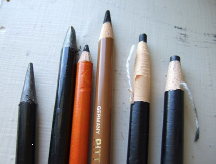
Graphite and charcoal pencils of different types
Charcoal Pencils are made with a compressed charcoal core sheathed either in wood or paper. Charcoal pencils are available in a hardness range similar to graphite.
Carbon Pencils are a close cousin with a different source of pigment. Instead of charcoal these are made of amorphous carbon black, manufactured from natural gas. This pigment has an extremely fine particle size with dense, heavy coverage. Compressed into pencil lead with proprietary binders, amorphous carbon black produces bold lines that lay down velvety smooth with a powerful stain. Carbon pencil produces a deep, matte black ideal for illustration and other camera-ready art.

Shop our full category of Charcoal.
Intended for reference only. Observe all package instructions. Dick Blick Holdings/Utrecht Art Supplies is not responsible for any damage to personal property that may result from use of the information presented herein. ©Copyright 2020 Dick Blick Holdings Inc. All rights reserved.