
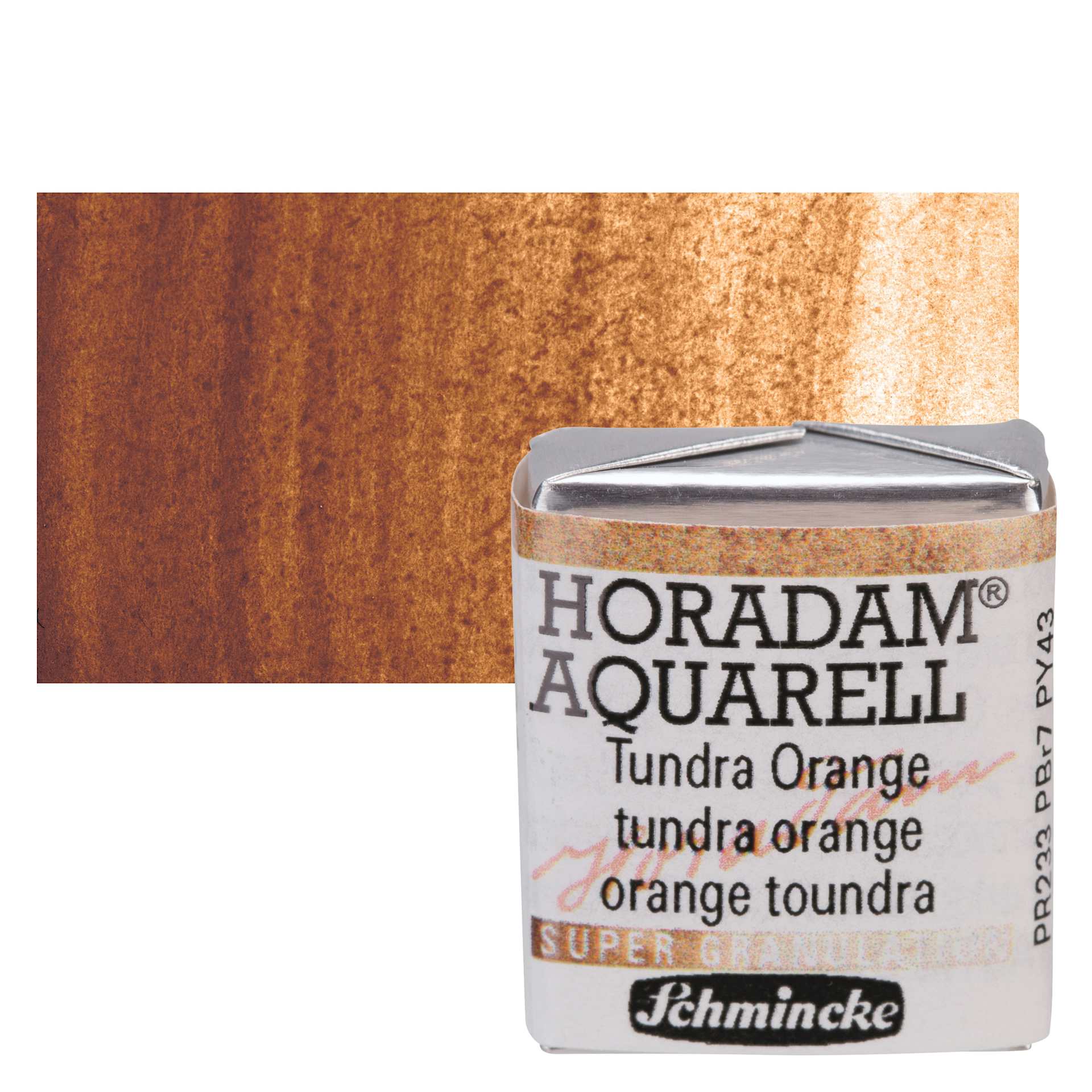
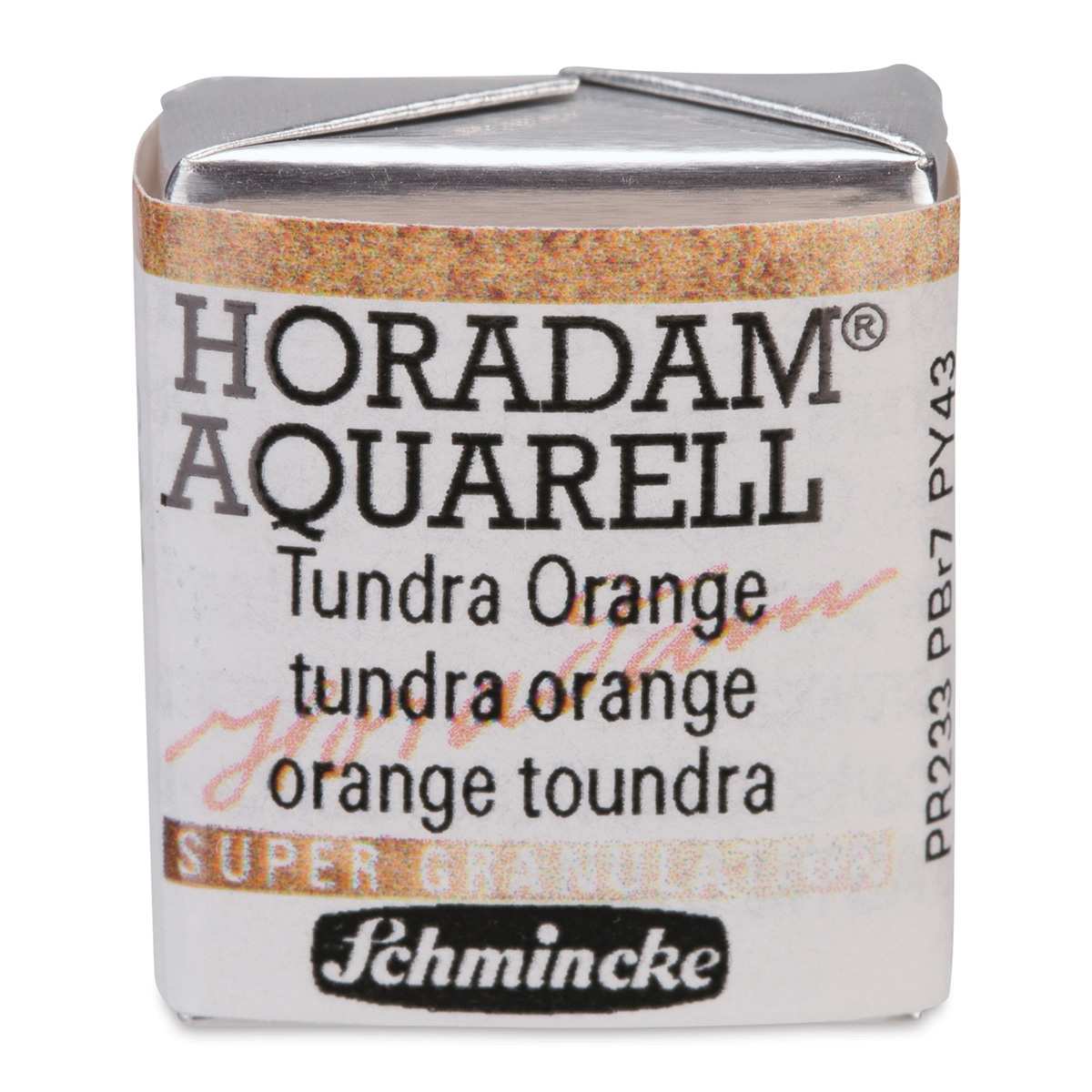
Schmincke Horadam Aquarell Artist Watercolor - Tundra Orange, Supergranulation, Half Pan
Save For Later
My Wish Lists
Product Details
- No.
- 981
- Description:
- Supergranulation Watercolor
- Color:
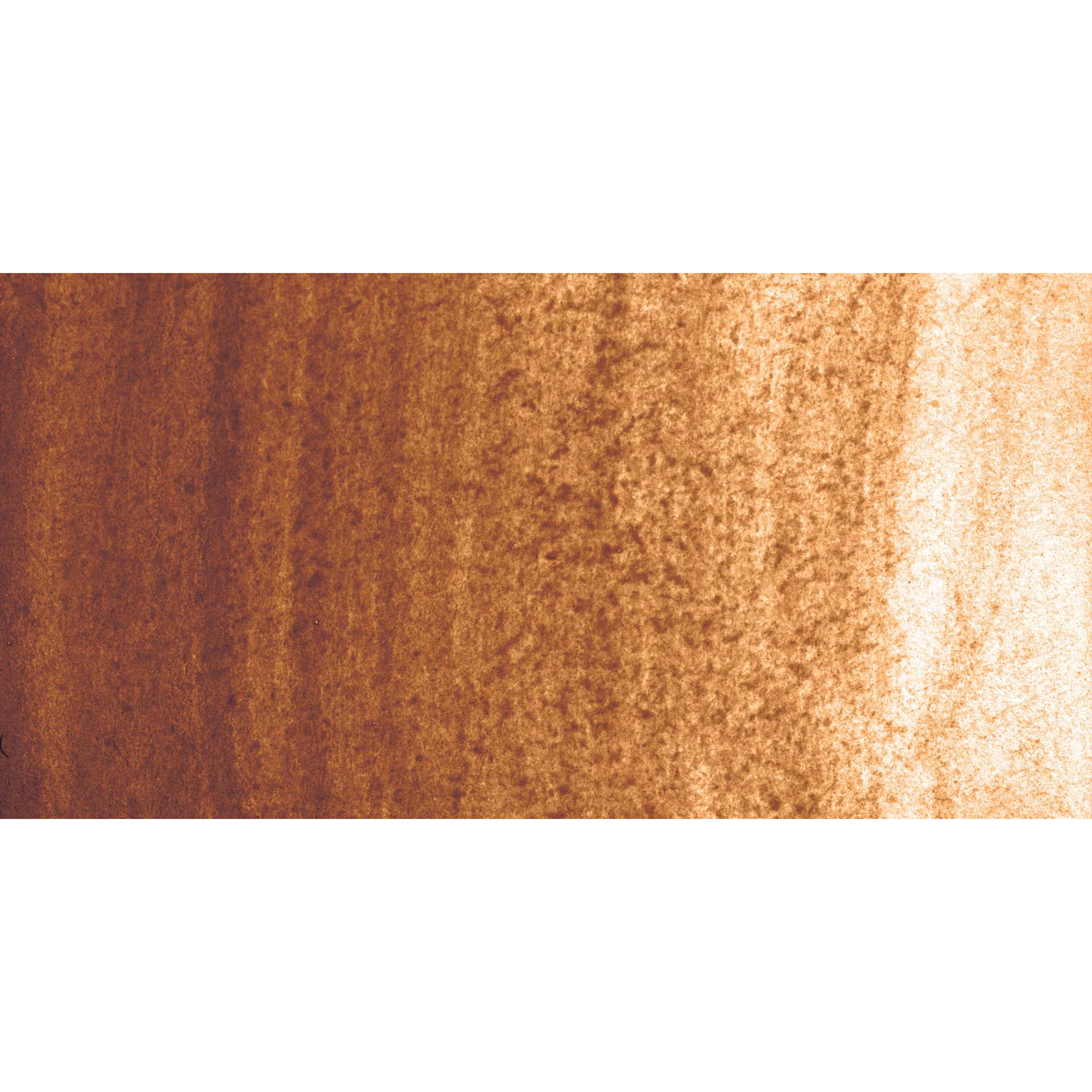
- Tundra Orange
- Format:
- Pan
- Size:
- Half Pan
Colors on Monitors -
Due to differences in users’ monitors, the colors presented are an approximation of the true color.
Reviews
Pigment Information
This color contains the following pigments:
PR233-Chrome Tin Pink Sphene
PBr7-Raw Umber
PY42-Yellow Iron Oxide
Pigment Name
PR233-Chrome Tin Pink Sphene
Pigment Type
inorganic
Chemical Formula
CaO + SnO2 + SiO2 + Cr2O3
Properties
Chrome tin pink sphene comprises a mixture of silicates and metal oxide salts. The opacity of the formulation depends on the proportions of these salts. Tinting strength is low compared with most organic pigments.
Permanence
The inorganic metal salts in this pigment are extremely stable.
History
This inorganic pigment has been used in enamels and ceramic glazes. Naturally occurring mineral deposits have been used in ceramic glazes for centuries.
Pigment Name
PBr7-Raw Umber
Pigment Type
earth
Chemical Name
hydrated iron oxide
Chemical Formula
α-FeO3+(OH) or Fe2O3 × MnO2
Properties
Raw Umber is a cool, transparent brown ranging from yellowish brown to greenish brown. It has surprisingly good tinting strength, a high level of opacity, mixes well with greens, and is quick drying in oil form. It has excellent color properties and can create a variety of subtle, clear tints when mixed with white. It grays when mixed with blue and white. Raw Umber can tend towards chalkiness in dark mixes in oil form.
Permanence
Raw Umber has excellent permanence.
History
This pigment gets its name from the Latin word umbra, meaning shadow or shade. Its full name is listed as terra di ombra, meaning earth of shadow/shade, due to its original extraction from the area of Umbria, Italy. It has been used as a pigment since prehistoric times. Currently, the finest umber comes from Cyprus.
Pigment Name
PY42-Yellow Iron Oxide
Chemical Name
iron(III)-oxide, hydrated
Chemical Formula
Fe2O3 • H2O
Properties
Yellow Ochre provides artists with earthtones from cream to brown. It has good hiding power, produces a quick drying paint, and can be safely mixed with other pigments. Its transparency varies widely from opaque shades to more transparent ones, which are valued for their use as glazes. If gypsum is present, Yellow Ochre is not suitable for frescoing. (See Brown Ochre, PY43.) PY42 is made from synthetic iron oxides. PY43 is made from natural iron oxide.
Permanence
Yellow Ochre has excellent permanence because ochres are some of the most permanent pigments available.
History
Ochre comes from the Greek word ochros, meaning pale yellow. It was one of the first pigments to be used by human beings, and evidence of its use has been found at 300,000 year old sites in France and the former Czechoslovakia.
Safety Data Sheet
UPC Code: 4012380231604