
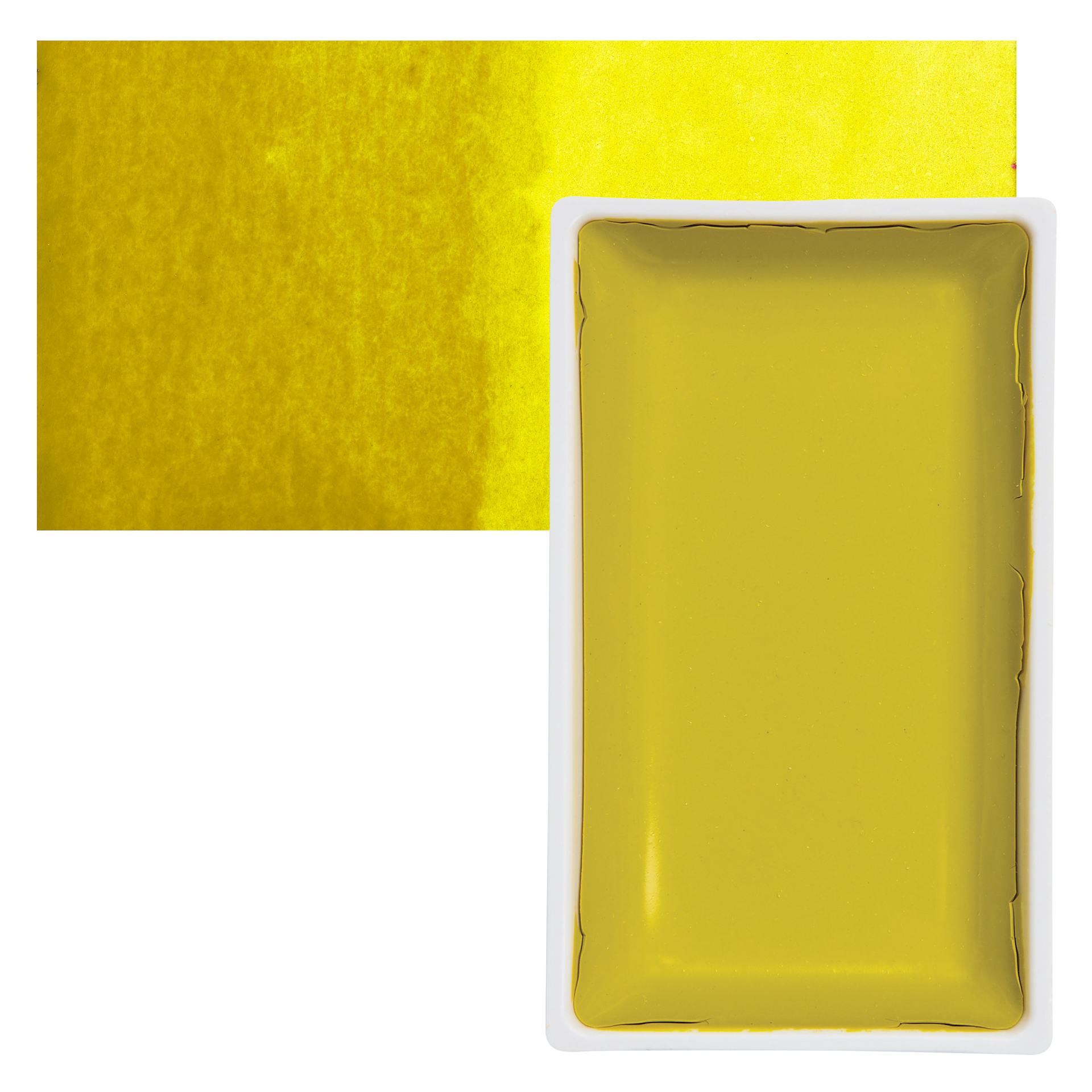
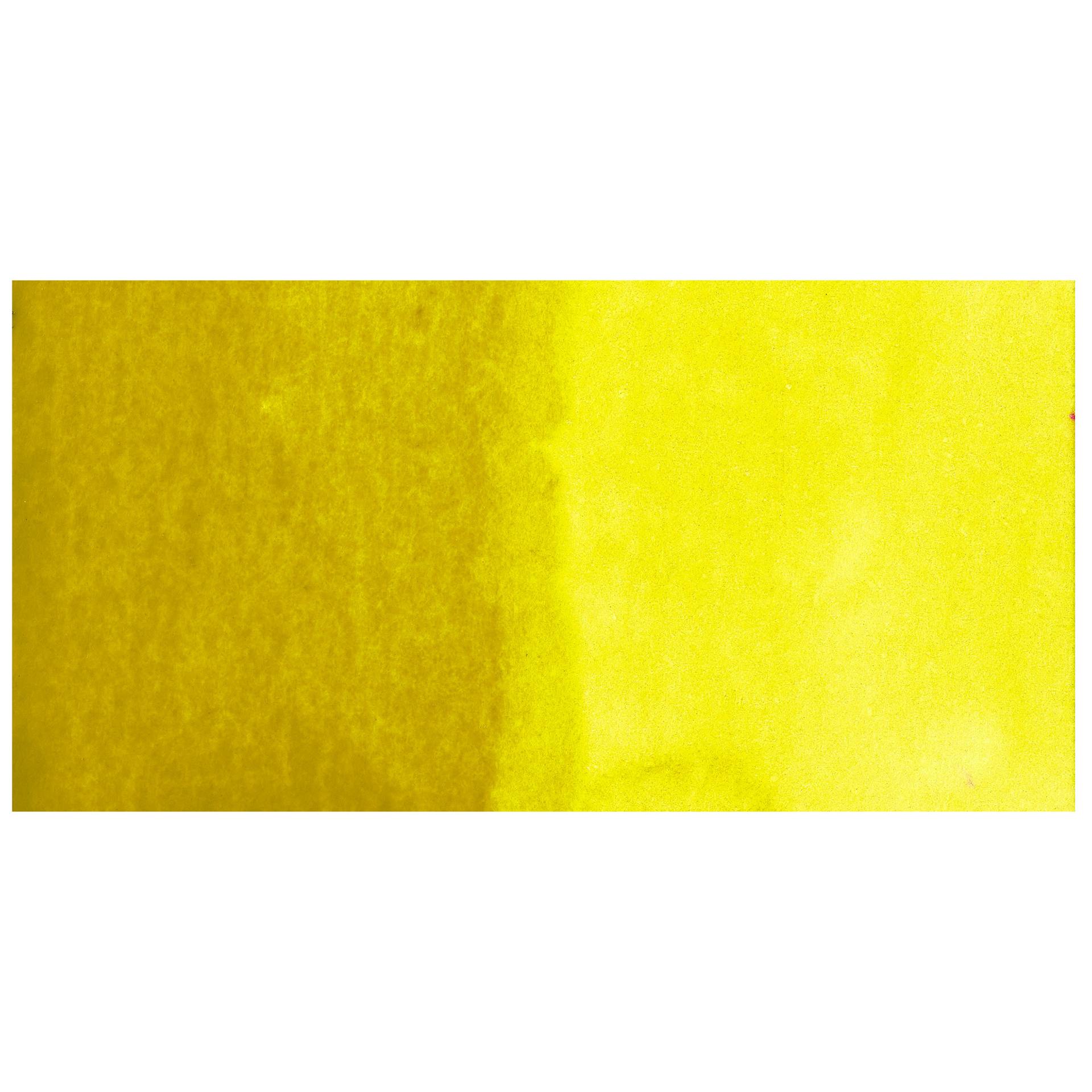
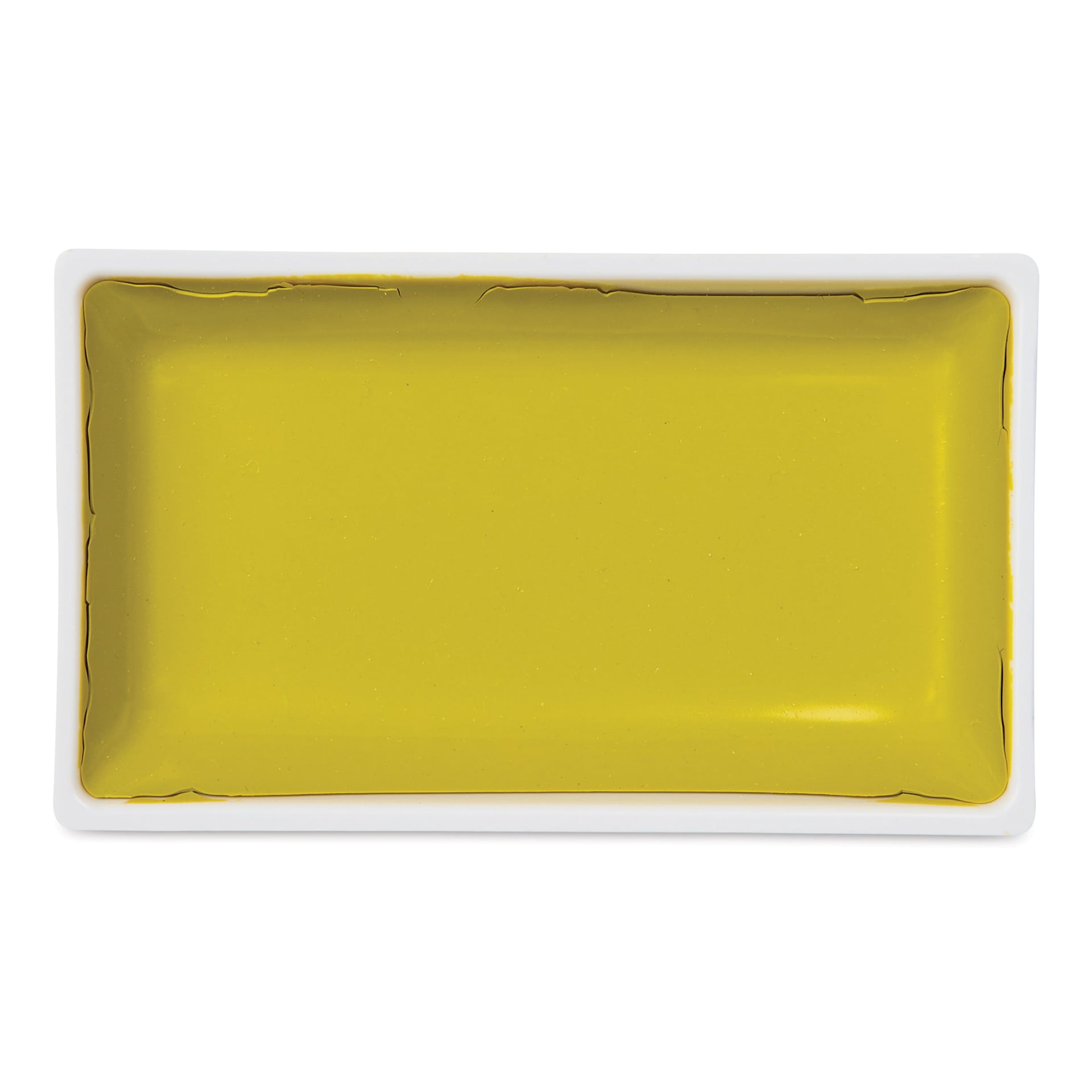
Kuretake Gansai Tambi Watercolor Pan - Saffron Yellow
Save For Later
My Wish Lists
Product Details
- No.
- 404
- Description:
- Watercolor Pan
- Color:
- Saffron Yellow
- Format:
- Pan
- Size:
- Full Pan
Reviews
Pigment Information
This color contains the following pigments:
PY1-Hansa Yellow G
PB15:3-Phthalo Blue
PY42-Yellow Iron Oxide
Pigment Name
PY1-Hansa Yellow G
Pigment Type
organic, monoazo
Chemical Formula
C17H16N4O4
Properties
This Hansa yellow is a transparent yellow. It has great brightness and tinting strength and its drying time ranges from average to slow. Hansa Yellow makes more intense tints and cleaner secondaries than Cadmium Yellows, especially when mixed with other organic or modern colors like Phthalo Blue and Green. Because they are more transparent, they have great value as glazing colors.
Permanence
Hansa Yellow G has good permanence and lightfastness, particularly in the lighter shades.
Pigment Name
PB15:3-Phthalo Blue
Pigment Type
organic
Chemical Name
beta copper phthalocyanine
Chemical Formula
C32H16CuN8
Properties
Phthalo Blue PB15:3 is a structural variant of Phthalo Blue PB15 that produces more greenish tones.
Permanence
Phthalo Blues are completely lightfast and stable and are permanent for all paint uses. They are currently used in inks, coatings, and many plastics due to their stability and are considered a standard pigment in printing ink and the packaging industry.
History
Developed by chemists using the trade name Monastral Blue, the organic blue dyestuff now known as Phthalo Blue was presented as a pigment in November 1935 in London. Its discovery was accidental. The dark color was observed in a kettle where a dye was being made from a British dyestuff plant. The demand for such a pigment came from commercial printers who wanted a cyan to replace Prussian Blue.
Pigment Name
PY42-Yellow Iron Oxide
Chemical Name
iron(III)-oxide, hydrated
Chemical Formula
Fe2O3 • H2O
Properties
Yellow Ochre provides artists with earthtones from cream to brown. It has good hiding power, produces a quick drying paint, and can be safely mixed with other pigments. Its transparency varies widely from opaque shades to more transparent ones, which are valued for their use as glazes. If gypsum is present, Yellow Ochre is not suitable for frescoing. (See Brown Ochre, PY43.) PY42 is made from synthetic iron oxides. PY43 is made from natural iron oxide.
Permanence
Yellow Ochre has excellent permanence because ochres are some of the most permanent pigments available.
History
Ochre comes from the Greek word ochros, meaning pale yellow. It was one of the first pigments to be used by human beings, and evidence of its use has been found at 300,000 year old sites in France and the former Czechoslovakia.
Safety Data Sheet
UPC Code: 847340041481