
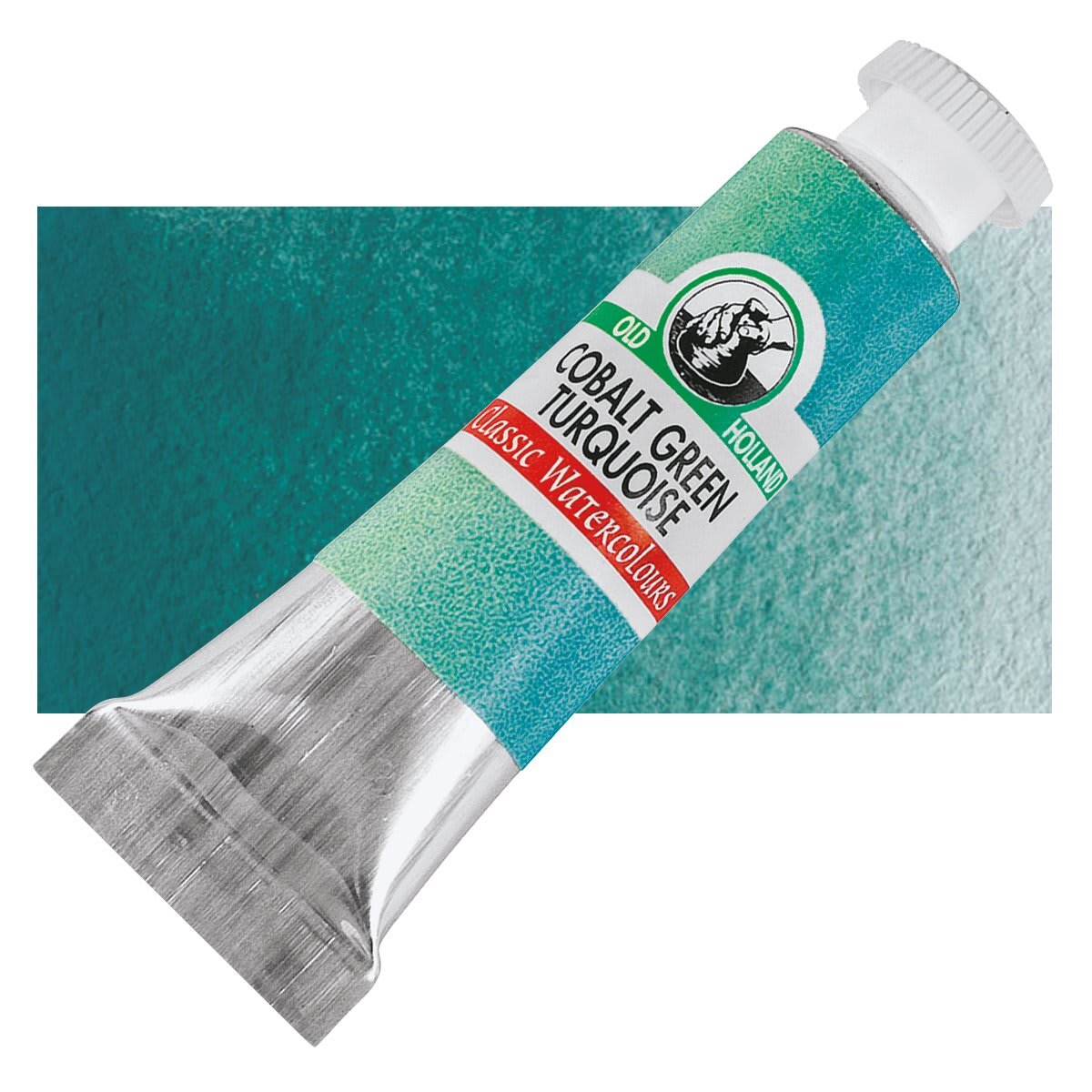
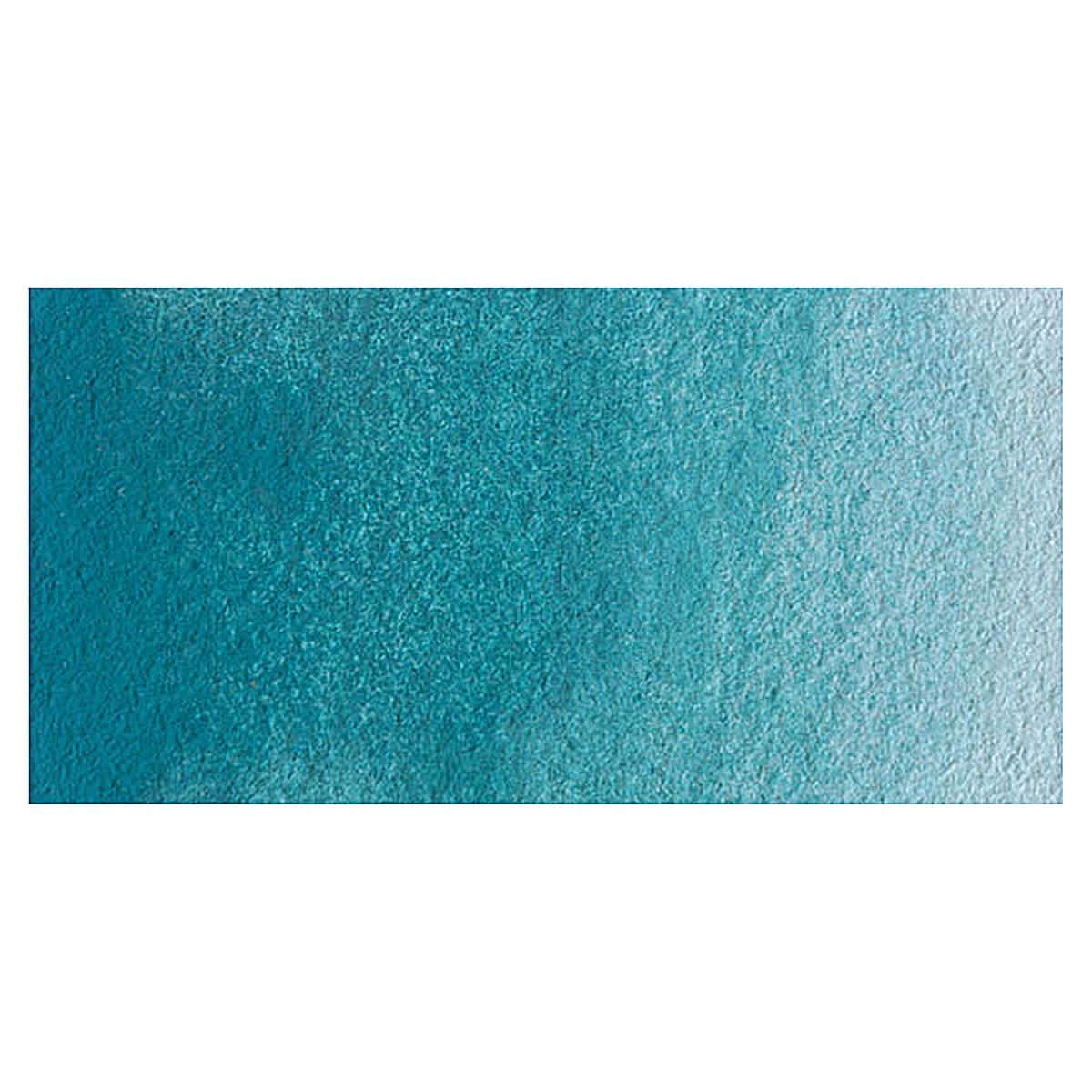
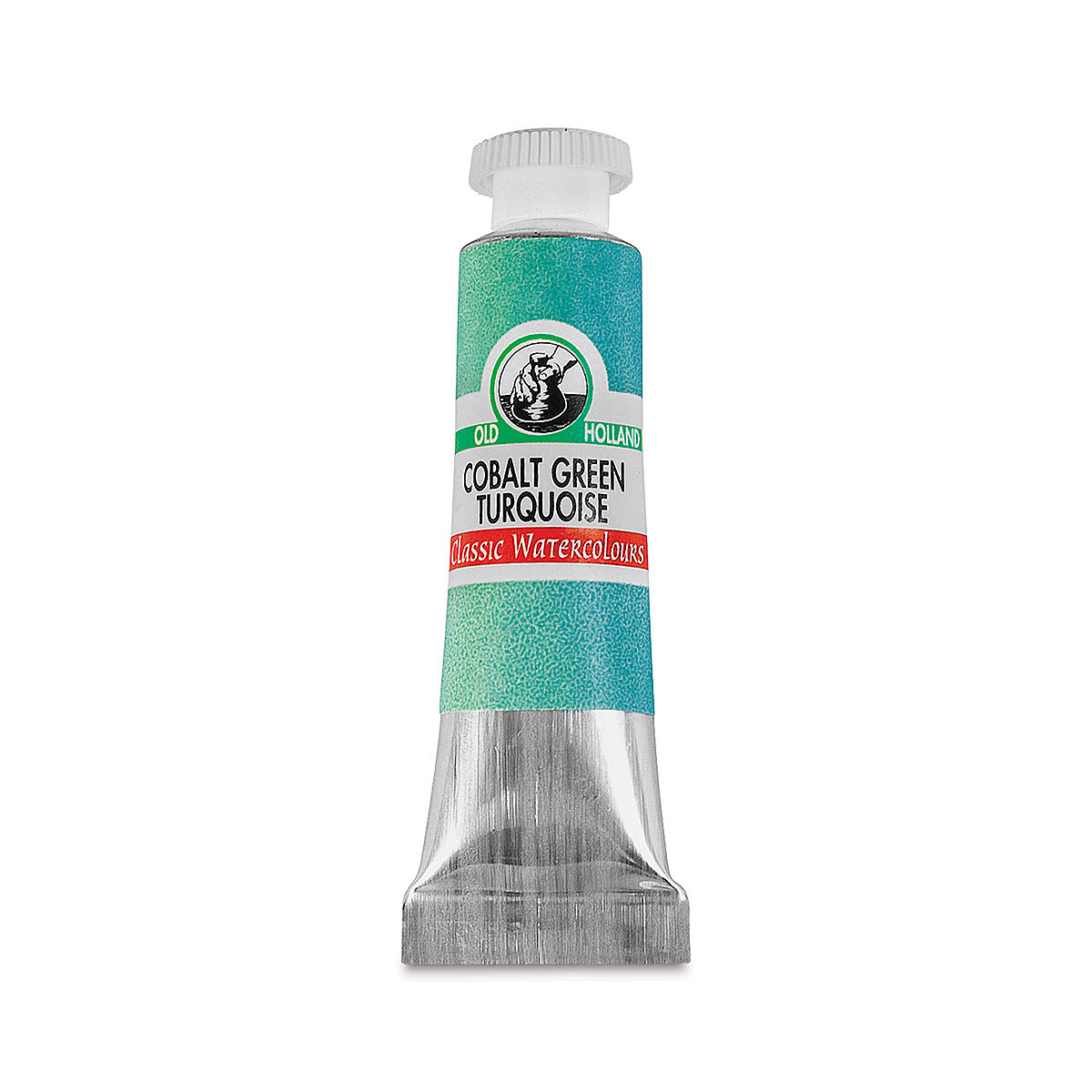
Old Holland Classic Artist Watercolor - Cobalt Green Turquoise, 6 ml tube
Save For Later
My Wish Lists
Product Details
- Description:
- Artist Watercolor
- Color:
- Cobalt Green Turquoise
- Format:
- Tube
- Size:
- 6 ml (0.20 oz)
Colors on Monitors -
Due to differences in users’ monitors, the colors presented are an approximation of the true color.
Reviews
Pigment Information
This color contains the following pigments:
PG50-Cobalt Green
PG26-Cobalt Green Deep
PG19-Cobalt Green
Pigment Name
PG50-Cobalt Green
Pigment Type
inorganic
Chemical Name
cobalt titanium oxide
Chemical Formula
Co2TiO4
Properties
Cobalt Titanium Oxide is a low intensity color with a weak tinting strength, similar to Cobalt Blue. It has an average to fast drying time.
Permanence
Cobalt Green has excellent permanence and lightfastness.
History
Since ancient times, smalt blue has been used to color glass and ceramics. Cobalt salts, which give smalt its characteristic blue color, were identified in the 18th century. Techniques for manufacturing various cobalt salts, offering a range of blues and greens, were developed in the 19th century.
Pigment Name
PG26-Cobalt Green Deep
Pigment Type
inorganic
Chemical Name
Cobalt chromium oxide
Properties
This pigment offers a deep but dull and opaque tone of Cobalt Green. It has moderate covering power, but low tinting strength. It is primarily for use on its own, or for mixing with other cobalt colors. It is an alternative to cobalt(II) zinc oxide, another form of Cobalt Green.
Permanence
Cobalt pigments are absolutely lightfast.
History
Cobalt chromium oxide is an alternative Cobalt Green to the better known cobalt zinc oxide. Both pigments were used by landscape artists before phthalocyanine-based pigments became widely available in the 20th century.
Pigment Name
PG19-Cobalt Green
Chemical Name
cobalt(II)-oxide-zinc(II)-oxide
Chemical Formula
CoO • ZnO
Properties
Cobalt Green is a pure, fairly opaque, moderately bright bluish-green with a low tinting strength and limited hiding power. It makes valuable grays and muted, minimalistic greens when mixed with other pigments. However, it can brown at full strength and fade when mixed with lead based whites. It is quick drying in oil form and is not widely used because its hue can easily be matched by mixing green and blue pigments with superior painting properties. It is currently not in wide use.
Permanence
Cobalt Green is completely lightfast. Its permanence is excellent, so it can be used in all painting techniques.
History
Cobalt comes from the Middle High German word kobolt, an underground goblin, because miners thought cobalt harmed silver ores. In 1780, the Swedish chemist Sven Rinmann developed a process for making a compound of cobalt and zinc (zinc oxide). It was introduced as a pigment in 1835, but poor tinting strength and high cost kept it in limited use throughout the next centuries. It gained some popularity among 19th century landscape painters.
Safety Data Sheet
UPC Code: 8715046022665
ASIN #: B005WK1SZ4