
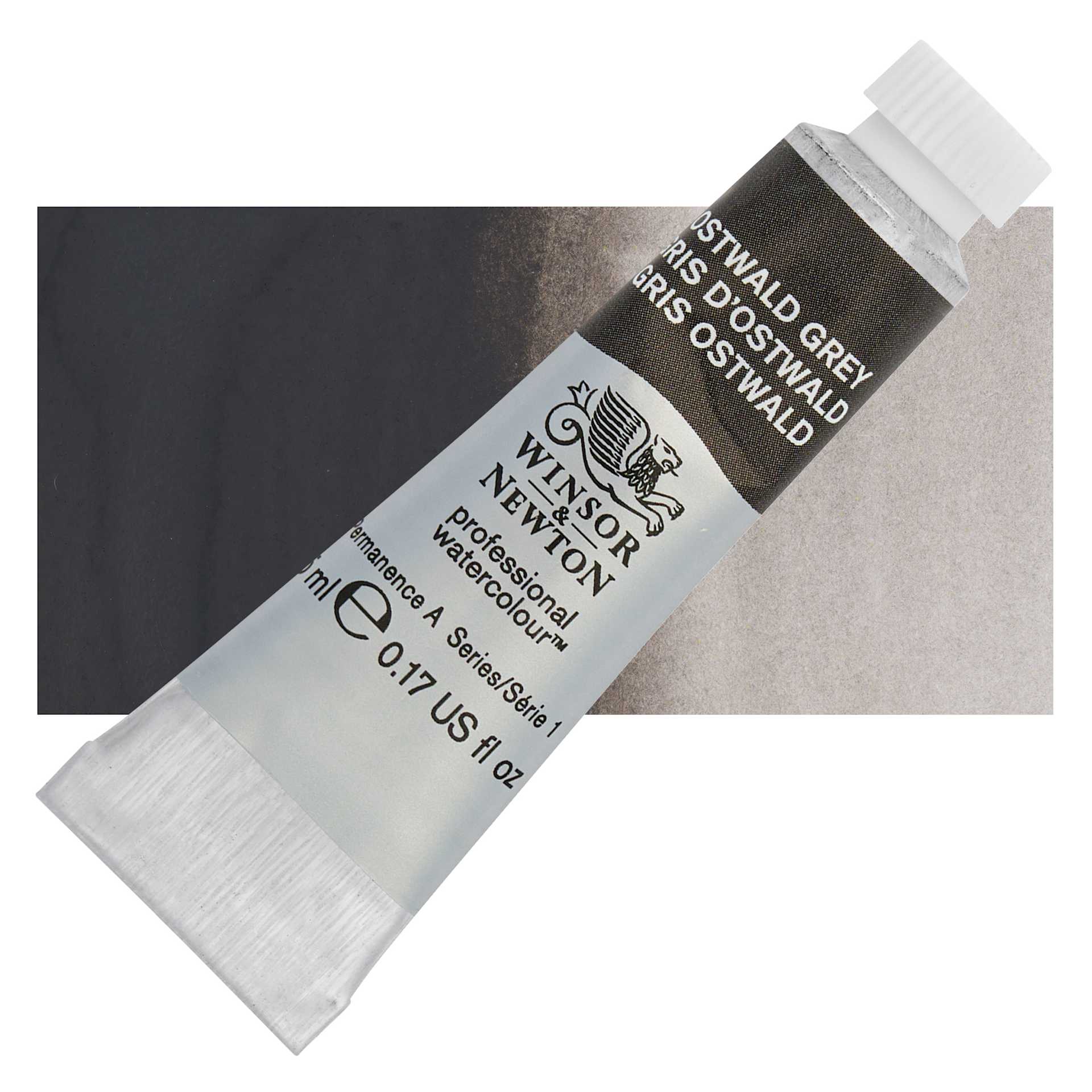
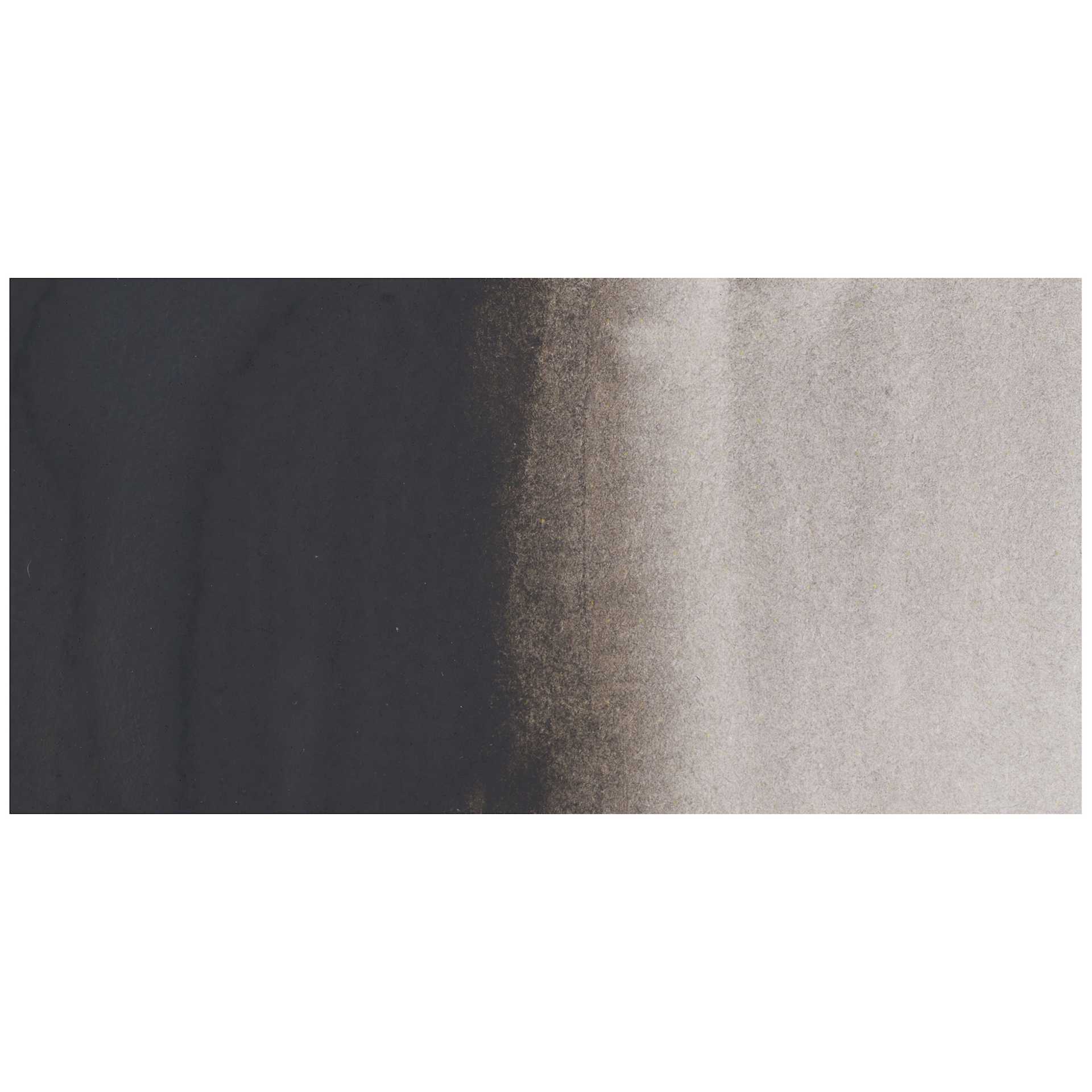
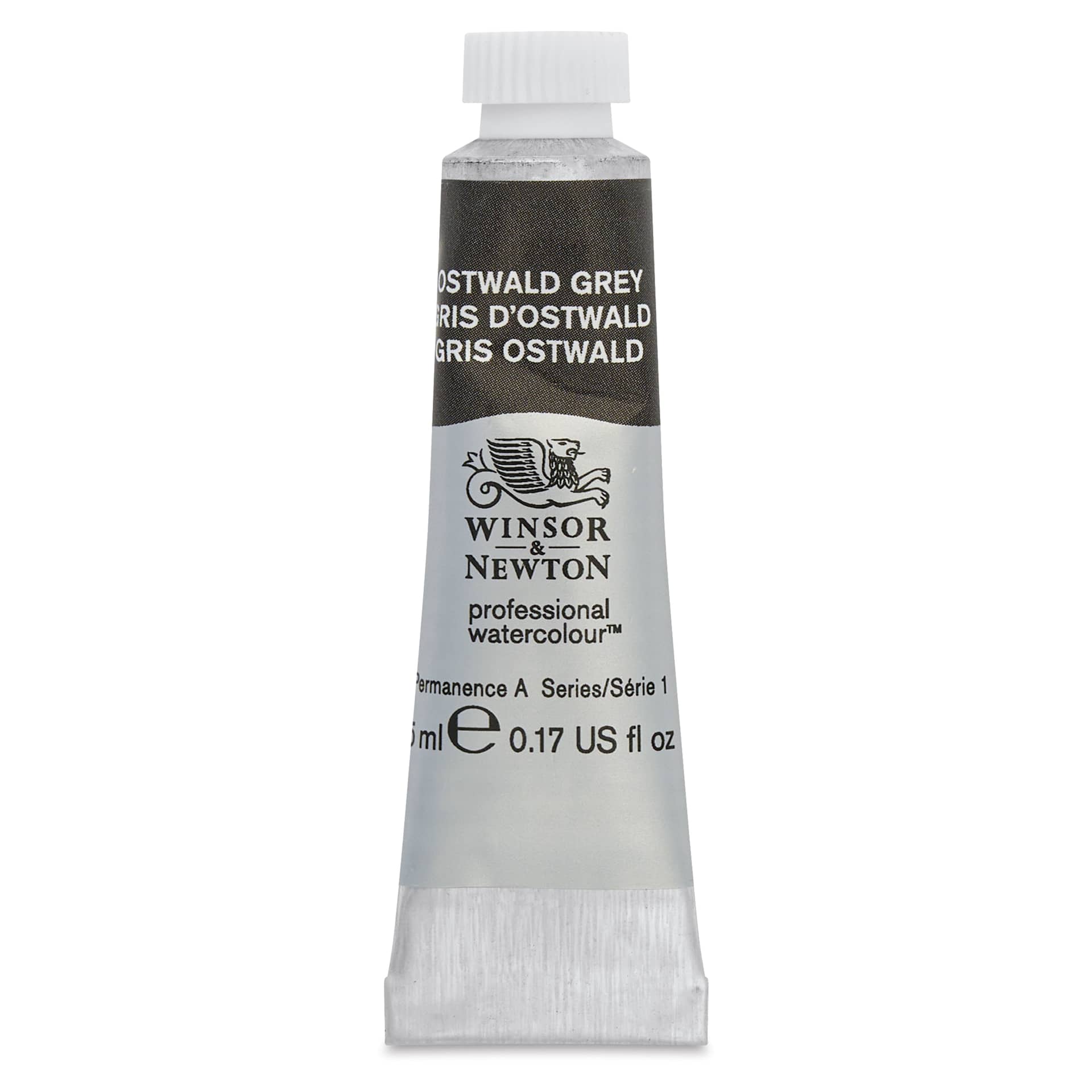
Winsor & Newton Professional Watercolor - Ostwald Gray, 5 ml
Save For Later
My Wish Lists
Product Details
- No.
- 428
- Description:
- Professional Watercolor
- Color:
- Ostwald Gray
- Series:
- 1
- Format:
- Tube
- Size:
- 5 ml (0.17 oz)
Colors on Monitors -
Due to differences in users’ monitors, the colors presented are an approximation of the true color.
Shipping Note - Due to manufacturer distribution restrictions, Winsor & Newton products cannot be shipped to addresses outside of North America.
Reviews
Pigment Information
This color contains the following pigments:
PBk6-Lamp Black
PW5-Lithopone
PY42-Yellow Iron Oxide
Pigment Name
PBk6-Lamp Black
Pigment Type
inorganic
Chemical Name
carbon
Chemical Formula
C
Properties
Lamp black is a very opaque, heavily staining black pigment that does not have much covering power. It is typically the most opaque black in watercolor form. Though a very pure black, it tends to muddy slightly in mixtures, is one of the slowest drying pigments in oils, and should not be used under other colors.
Permanence
Lamp Black is very lightfast and absolutely permanent. It is used in all techniques in permanent painting.
History
Lamp Black is a carbon based black traditionally produced by collecting soot (known as lampblack) from oil lamps. It is the black found in Egyptian murals and tomb decorations and was the most popular black for frescoing until the development of Mars Black.
Pigment Name
PW5-Lithopone
Pigment Type
inorganic
Chemical Name
coprecipitated zinc sulphide and barium sulphate
Chemical Formula
Zn + BaSO4
Properties
Lithopone is a low tinting strength, semi-transparent white pigment that is often used as a filler or extender in other colors, or as the base for laked pigments.
Permanence
Lithopone is absolutely permanent and lightfast.
History
Lithopone was discovered by G.F. de Doubet in 1850. It was developed commercially in the 1870s as a substitute or supplement for lead carbonate, to overcome the many shortcomings of white lead pigment, including toxicity, poor weathering, and darkening in the presence of sulfur compounds. It is used most often in interior paints and enamels. Its use as a white pigment has been superceeded in many applications by titanium dioxide.
Pigment Name
PY42-Yellow Iron Oxide
Chemical Name
iron(III)-oxide, hydrated
Chemical Formula
Fe2O3 • H2O
Properties
Yellow Ochre provides artists with earthtones from cream to brown. It has good hiding power, produces a quick drying paint, and can be safely mixed with other pigments. Its transparency varies widely from opaque shades to more transparent ones, which are valued for their use as glazes. If gypsum is present, Yellow Ochre is not suitable for frescoing. (See Brown Ochre, PY43.) PY42 is made from synthetic iron oxides. PY43 is made from natural iron oxide.
Permanence
Yellow Ochre has excellent permanence because ochres are some of the most permanent pigments available.
History
Ochre comes from the Greek word ochros, meaning pale yellow. It was one of the first pigments to be used by human beings, and evidence of its use has been found at 300,000 year old sites in France and the former Czechoslovakia.
Safety Data Sheet
UPC Code: 884955095201